Pure Bilona Ghee Delivered FREE across india with discounted price for new customers

7 Common Myths About Ghee Debunked | Truth About A2 Bilona Ghee
Think ghee causes weight gain or is bad for your heart? Discover the truth behind 7 common myths about ghee and learn why pure A2 Bilona Ghee can be part of a balanced lifestyle.
RAJASTHAN ORGANICS BLOG
- Ekta Amit Bishnoi
6/23/20263 min read
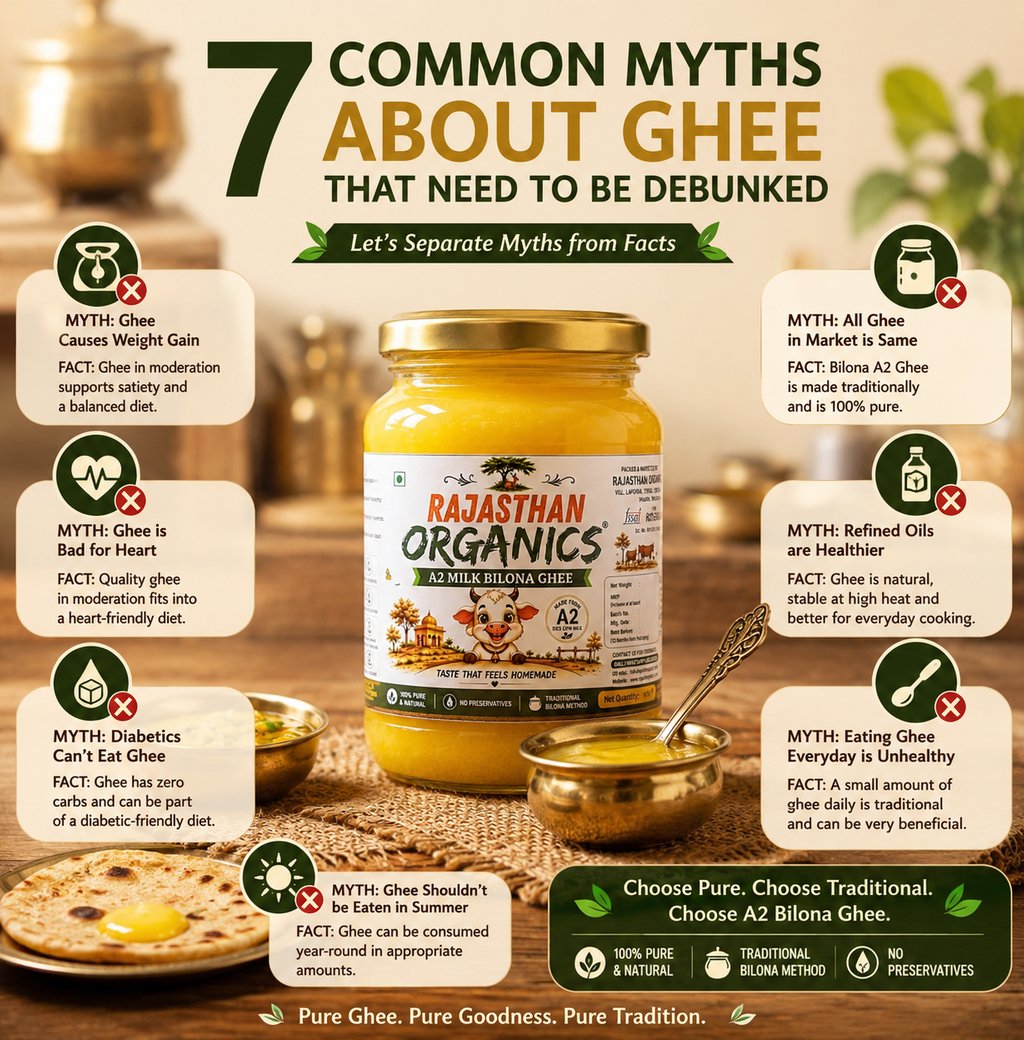
7 Common Myths About Ghee That Need to Be Debunked
For centuries, ghee has been an essential part of Indian kitchens. Yet, over the years, many myths have emerged around its consumption. Some people avoid ghee because they believe it causes weight gain, while others think it is harmful for heart health.
The truth is that many of these beliefs are based on misunderstandings rather than facts.
Let's separate myth from reality and understand what makes traditional A2 Bilona Ghee a valuable part of a balanced diet.
Myth #1: Ghee Always Causes Weight Gain
The Reality
One of the biggest misconceptions about ghee is that it automatically leads to weight gain.
Weight gain does not happen because of one food alone. It occurs when overall calorie intake consistently exceeds the body's energy requirements.
Pure ghee contains healthy fats that can help increase satiety, meaning you may feel full for longer after meals. This can reduce unnecessary snacking and overeating.
When consumed in moderation as part of a balanced diet, ghee can fit into a healthy lifestyle.
Internal Link Opportunity:
👉 Read: Why Did Our Grandparents Eat Ghee Every Day? Traditional Wisdom & Modern Science
Myth #2: Ghee Is Bad for Heart Health
The Reality
Many people still associate all fats with poor heart health.
However, nutrition science has evolved significantly over the years. Today, experts recognize that the type and quality of fat matter more than simply avoiding fats altogether.
Traditionally prepared ghee contains naturally occurring fats and has been consumed for generations as part of balanced diets.
The key factors are:
Portion control
Overall dietary pattern
Physical activity
Choosing pure, authentic ghee instead of heavily processed alternatives
As with any food, moderation is important.
Internal Link Opportunity:
👉 Read: A2 Bilona Ghee vs Regular Ghee: What Makes It Different?
Myth #3: People with Diabetes Should Never Eat Ghee
The Reality
Many people assume that diabetics must completely avoid ghee.
In reality, pure ghee contains virtually no carbohydrates and does not directly cause spikes in blood sugar levels.
When consumed in appropriate quantities as part of a balanced meal plan, ghee can be included in many diets.
However, individual nutritional needs vary, so people managing diabetes should always follow the guidance of their healthcare professionals.
The focus should be on overall dietary balance rather than eliminating one traditional food.
Myth #4: Ghee Should Not Be Consumed During Summer
The Reality
Many households believe that ghee should only be consumed in winter.
This myth comes from the fact that ghee provides warmth and energy, making it especially popular during colder months.
However, traditional Indian diets include ghee throughout the year.
During summer, people may consume slightly smaller quantities, but ghee still remains a valuable source of healthy fats and nourishment.
The secret lies in moderation and maintaining proper hydration.
Myth #5: All Ghee Available in the Market Is the Same
The Reality
Not all ghee is produced using the same methods.
The quality of ghee depends on:
Milk source
Production process
Purity standards
Storage methods
Traditional A2 Bilona Ghee is prepared by first converting milk into curd, then churning it into butter before slowly cooking it into ghee.
This age-old method differs significantly from many commercial production techniques.
Consumers should pay attention to authenticity and sourcing when choosing ghee.
Internal Link Opportunity:
👉 Read: The Traditional Bilona Process: From Milk to Pure Golden Ghee
Myth #6: Refined Oils Are Always Healthier Than Ghee
The Reality
Refined oils are often marketed as healthier alternatives, but the comparison is not always straightforward.
Ghee has been used in Indian cooking for centuries and offers excellent flavor and cooking stability.
Unlike heavily processed oils, traditionally prepared ghee remains closer to its natural form.
Choosing between oils and ghee should depend on:
Cooking method
Quality of ingredients
Individual dietary preferences
A balanced kitchen often includes multiple healthy cooking fats rather than relying on a single option.
Myth #7: Eating Ghee Every Day Is Unhealthy
The Reality
This myth contradicts centuries of traditional dietary practices.
Our grandparents regularly consumed ghee as part of homemade meals and active lifestyles.
The problem is not necessarily daily consumption—it is excess consumption.
A small amount of pure ghee added to balanced meals can contribute flavor, satisfaction, and nutritional value.
The emphasis should be on quality, moderation, and overall dietary habits.
How to Choose Pure Ghee
To enjoy the benefits of ghee, quality matters.
Look for:
✔ Traditional Bilona Method
✔ A2 Cow Milk Source
✔ No Artificial Additives
✔ Natural Aroma and Rich Golden Color
✔ Trusted Brand Transparency
Authentic ghee should feel like a traditional food, not a processed product.
Final Thoughts
Many of the fears surrounding ghee are based on myths that have been repeated for years.
When consumed mindfully and sourced from authentic producers, pure A2 Bilona Ghee can be a valuable part of a balanced lifestyle.
Instead of fearing traditional foods, it may be time to revisit the wisdom that generations before us followed naturally.
After all, some traditions survive for centuries because they truly stand the test of time.
Rajasthan Organics
Registered Address : WARD NO. 04, NEAR STATE BANK OF INDIA, LIKHMISAR, PILIBANGA, HANUMANGARH - 335803
Contact us :
Newsletter
EMail :
info@rajasthanorganics.com
Call Us : +91 8619328204
© 2024. All rights reserved.