Common Myths About Desi Ghee
Discover the truth behind common myths about Desi Ghee. Learn what science says about weight gain, heart health, digestion, and more.
RAJASTHAN ORGANICS BLOG
- Ekta Amit Bishnoi
6/17/20263 min read
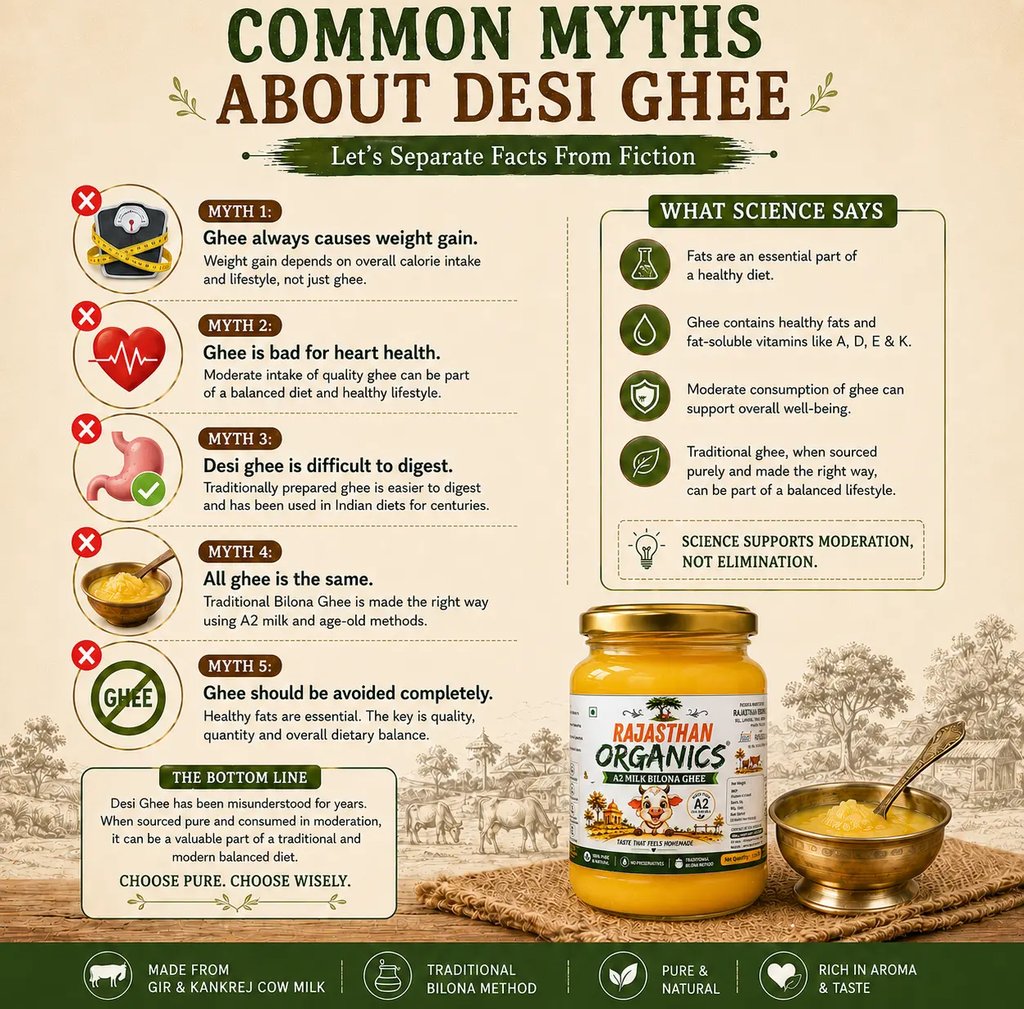
Desi Ghee has been an integral part of Indian kitchens for centuries, valued for its rich flavor, versatility, and cultural significance. Whether it's drizzled over dal, used in festive sweets, or added to everyday meals, pure Desi Ghee remains a staple in millions of homes.
However, despite its long history, several misconceptions continue to surround ghee. Many people believe it always causes weight gain, harms heart health, or should be completely avoided. In reality, many of these beliefs are based on myths rather than scientific evidence.
In this article, we'll debunk the most common myths about Desi Ghee, explore what nutrition experts say, and help you make informed dietary choices.
Myth #1: Desi Ghee Always Causes Weight Gain
One of the biggest myths is that eating Desi Ghee automatically leads to weight gain.
The Reality
Weight gain occurs when your overall calorie intake consistently exceeds the calories your body burns. No single food—including A2 Bilona Ghee or traditional Desi Ghee—is solely responsible for weight gain.
When consumed in moderation as part of a balanced diet, ghee can comfortably fit into a healthy eating pattern.
Factors that influence body weight include:
Total daily calorie intake
Physical activity
Sleep quality
Overall eating habits
Individual metabolism
The focus should always be on portion control and a balanced lifestyle, rather than eliminating one traditional food.
Myth #2: Ghee Is Bad for Heart Health
Many people assume that all fats are unhealthy.
The Reality
Nutrition science has evolved significantly over the years. Experts now recognize that dietary fats are an essential part of a balanced diet.
Instead of avoiding fats completely, nutrition professionals generally recommend:
Choosing high-quality fat sources
Consuming them in moderation
Maintaining an overall healthy lifestyle
Like any food, excessive consumption isn't advisable, but moderate amounts of quality Desi Ghee can be included within a balanced eating pattern.
If you have a medical condition such as high cholesterol or cardiovascular disease, consult your healthcare professional for personalized dietary advice.
Myth #3: Desi Ghee Is Difficult to Digest
Another common misconception is that Desi Ghee is heavy and difficult to digest.
The Reality
For generations, Indian households have used traditionally prepared ghee in everyday cooking.
Many people comfortably enjoy ghee in:
Dal
Roti
Khichdi
Rice
Vegetables
Traditional sweets
Its rich taste and versatility have made it one of the most widely used cooking fats in Indian cuisine.
As with any food, individual tolerance can vary from person to person.
Myth #4: All Ghee Is Exactly the Same
Not every jar labeled "ghee" is produced using the same process.
The Reality
The quality of ghee depends on several important factors, including:
✔ Source of Milk
The quality of milk plays a significant role in the final product.
✔ Preparation Method
Traditional Bilona Ghee is prepared differently from many large-scale commercial production methods.
✔ Quality Standards
Careful sourcing, traditional preparation, and proper packaging all contribute to the overall quality of the final product.
Choosing authentic, carefully prepared ghee helps ensure a better culinary experience.
Myth #5: Ghee Should Be Completely Avoided
Some people believe that all fats are unhealthy and remove ghee entirely from their diet.
The Reality
Modern nutrition recognizes that fats are one of the three essential macronutrients alongside carbohydrates and protein.
Rather than avoiding fats completely, experts generally recommend:
Balanced nutrition
Appropriate portion sizes
Variety in food choices
Choosing quality ingredients
A balanced diet includes carbohydrates, proteins, healthy fats, vitamins, minerals, and fiber.
What Does Modern Science Say About Desi Ghee?
Current nutrition research suggests that fats play several important roles in the human body, including:
Supporting normal body functions
Helping absorb fat-soluble vitamins (A, D, E, and K)
Contributing to a balanced diet
Research on traditional foods like Desi Ghee continues to evolve. While studies are ongoing, nutrition experts consistently emphasize:
Moderation
Overall dietary quality
Individual health needs
Active lifestyle
No single food determines overall health. Instead, long-term eating habits and lifestyle choices matter most.
Tips for Including Desi Ghee in a Balanced Diet
Here are some simple ways to enjoy pure Desi Ghee responsibly:
✔ Use moderate quantities while cooking.
✔ Add a small spoonful to dal, khichdi, or roti.
✔ Use it in traditional Indian recipes.
✔ Pair it with a balanced diet rich in vegetables, fruits, whole grains, and protein.
✔ Choose high-quality, traditionally prepared ghee.
Why Choose Rajasthan Organics A2 Bilona Ghee?
At Rajasthan Organics, we source our A2 Bilona Ghee from trusted village families who continue traditional dairy practices.
Every batch is:
Made using the traditional Bilona method
Carefully quality checked
Hygienically packed
Rich in authentic aroma and taste
Prepared with a focus on purity and tradition
Our goal is to bring the authentic taste of Rajasthan's traditional kitchens to homes across India.
Conclusion
For centuries, Desi Ghee has been an important part of Indian culinary traditions. Many myths surrounding ghee have been passed down over time, but modern nutrition emphasizes balance rather than unnecessary restrictions.
When consumed in moderation as part of a healthy lifestyle, quality Desi Ghee can be enjoyed alongside a well-rounded diet. Understanding the difference between myths and facts allows consumers to make informed choices while appreciating the rich heritage of this timeless Indian ingredient.
Rajasthan Organics
Registered Address : WARD NO. 04, NEAR STATE BANK OF INDIA, LIKHMISAR, PILIBANGA, HANUMANGARH - 335803
Contact us :
Newsletter
EMail :
info@rajasthanorganics.com
Call Us : +91 8619328204
© 2024. All rights reserved.